Scope Creep: How It Kills Projects (And How to Stop It)
Moeed Qadeer
Technical Project Manager
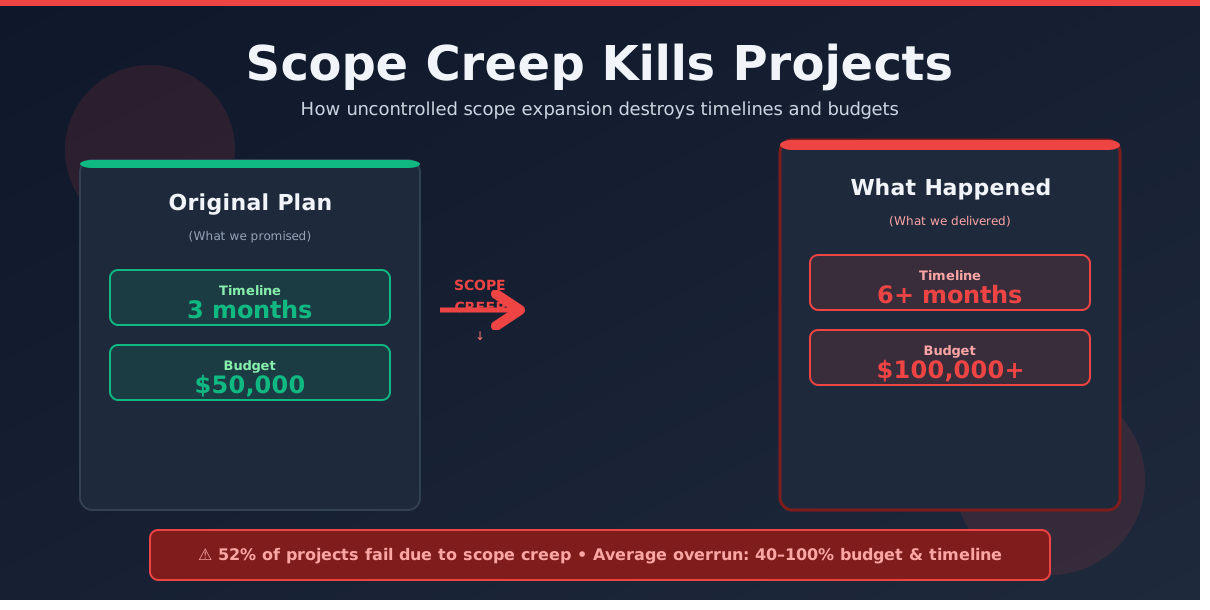
Your project was supposed to take 3 months and cost $50,000. Then your client mentions they'd "love to add a mobile app version." A week later, they ask for "real-time dashboard updates."
By month 4, you're 40% over budget, your team is burned out, and the original deadline has slipped by 8 weeks. This is scope creep. And it's the #1 reason projects fail.
What Is Scope Creep? (And Why It's Different From Scope Change)
Scope Creep Definition: Uncontrolled growth in project requirements that wasn't originally planned or budgeted for.
The difference matters: Controlled scope changes (with adjusted budgets/timelines) are healthy. Uncontrolled scope creep is a killer.
Why Scope Creep Happens: 5 Root Causes
1. Vague Initial Requirements
Without clarity, each team member fills gaps with their own assumptions. Designer thinks "simple page", Developer thinks "AI engine", Client thinks "multi-vendor system."
2. Weak Stakeholder Communication
Scope changes slip in through casual conversations on Slack or email instead of going through a formal Change Control Board.
3. Unrealistic Timelines & Budgets
When the original estimate is already tight, any scope addition breaks the project entirely.
4. Unclear Success Criteria
When success isn't defined upfront, stakeholders keep adding "just one more thing" thinking it helps.
5. Team Misalignment
Sales promises features. Engineering didn't budget for them. Product manager wasn't consulted. The result is chaos.
The 7-Step Framework to Prevent Scope Creep
Step 1: Define Crystal-Clear Scope (Weeks 1–2)
Document a Scope Statement with explicit IN/OUT items. Attach success metrics (measurable, not vague) and share with all stakeholders for feedback.
Step 2: Implement Formal Change Control
Create structured workflows. A Change Request is submitted, followed by an Impact Analysis (cost/timeline), and a Stakeholder Review. Only approved changes are built.
Step 3: Document Requirements in Detail
Create three documents: Requirements Document (SRS/BRD), Product Roadmap, and Scope Document. Use these as reference when new features are requested.
Step 4: Use Agile Sprints to Control Scope
Lock sprint scope. No mid-sprint changes except emergencies. Everything goes to the product backlog for the next sprint planning.
Step 5: Establish a Change Control Board (CCB)
Include the PM, Tech Lead, and Finance. Review all scope change requests, assess trade-offs, and make Go/No-Go decisions.
Step 6: Communicate Impact Transparently
When scope changes are requested, always show timeline impact, budget impact, trade-offs, and risk impact to prevent surprises.
Step 7: Monitor & Report Using Metrics
Track scope change frequency, budget variance, and timeline variance weekly. Share scope health updates regularly.
Conclusion: Scope Creep Is Preventable
Scope creep isn't an act of God. It's a symptom of poor requirements definition, weak change control, and misaligned communication. But with this 7-step framework, you can prevent 90%+ of scope creep.
The result? Projects that deliver on time, on budget, and with quality intact. The question isn't "Will scope creep happen?" but "Are you ready to manage it?"
Need a Technical Expert for Your Next Project?
Whether you're launching a new startup, building a complex SaaS platform, or need to optimize your Agile workflows, I can help you deliver your product faster and smarter.